
The shift towards neighbourhood health services is not about creating entirely new models of care. It is about building on what already works and supporting people more effectively, closer to home.
 Digital Care Hub, the national support organisation for social care providers, says that it is the changing role of data and digital technology which can make this possible. Shared records, remote monitoring, and emerging uses of artificial intelligence are enabling teams to intervene earlier, co-ordinate more effectively, and take a more proactive approach to care.
This creates real opportunity, but it also brings a practical challenge into focus. Digital capability is not yet developing evenly across the system, and neighbourhood health is not delivered by the NHS alone.
 Creating a clear picture
Neighbourhood teams rely on professionals working together across organisational boundaries, which only works when information moves with the person. In practice, that means bringing together multiple types of insight: a GP consultation, a hospital discharge summary, observations recorded by a care worker, and data from a monitoring device in someone’s home. When these connect, small changes become easier to spot and can prompt an earlier response. When they do not, staff are left piecing together partial information, often relying on workarounds, and opportunities for early intervention can be missed.
Progress is real – but inconsistent
There has been strong progress in digital transformation across the NHS, and social care is also moving forward, with many providers adopting digital care records and exploring new technologies. However, this progress is not yet consistent. Some care homes are already using connected devices and sharing information digitally with NHS teams, while others are still improving connectivity or building workforce confidence. That variation matters because neighbourhood health depends on every part of the system being able to contribute.
 Developing digital capabilities across health and social care
For senior leaders, this is fundamentally about delivery. Digital capability across social care needs to be developed alongside NHS systems, not after them. That means reliable infrastructure, interoperable records, access to devices, and support for the workforce, backed by sustained investment rather than short-term programmes.
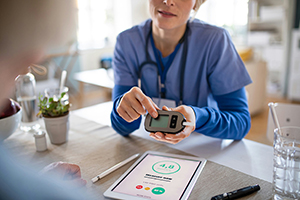
Virtual wards and remote monitoring offer a clear example of how this shift is already happening. They are well established in many areas, supporting people with frailty, respiratory conditions, and long-term illness at home or in care homes. A person with chronic obstructive pulmonary disease might check their oxygen levels daily using a pulse oximeter, while in a care home, monitoring technology might detect early signs of deterioration. This information is brought together and reviewed by a multidisciplinary team, enabling a quicker response when needed.
However, access to this level of support is not yet consistent. If these approaches are to become standard, the supporting infrastructure needs to be in place everywhere, including in social care settings.
 Role of AI
As more data is brought together, there is growing interest in how artificial intelligence can support care. It can help identify patterns, highlight risk earlier, and support planning at both individual and population level. However, this depends on having a complete and connected dataset. If social care data is missing, the insights are less reliable.
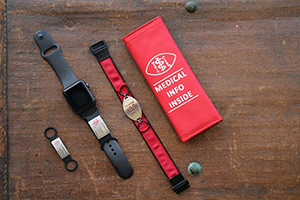 At the same time, the way data is handled becomes increasingly important. Cyber security and data protection need to be built in from the outset, and staff need appropriate access to information. Role-based access allows people to see what they need to deliver care without unnecessary complexity. When this balance is right, it supports safe and confident decision-making.
Social care providers are central to making neighbourhood health work. They support people every day and are often the first to notice changes in condition or behaviour. They are also increasingly expected to contribute to prevention, discharge, and ongoing monitoring. That role depends on having the right tools.
New opportunities
Neighbourhood health services bring together new ways of working, new expectations, and new opportunities. Digital and data sit underneath all of them. Virtual wards and remote monitoring show what can be achieved when these elements come together. The next step is to make that level of capability consistent across the whole system, with social care included from the outset so that more coordinated, proactive, and person-centred care becomes the norm.
Digital Care Hub is an independent, not-for-profit organisations providing free information, guidance and support to social care on tech & data. Throughout May, Digital Care Hub will be focusing on neighbourhood health including a webinar on Neighbourhood health and the role of social care data on 21 May.
For details, visit: www.digitalcarehub.co.uk/digital-care-in-focus