

Over the past 20 years Wideblue has worked with hundreds of inventors to bring their medical device ideas to market. These are some of the key lessons we have learned.
By Euan McBrearty, Head of Commercial & Innovation, Wideblue
1. The medical device sector is highly regulated and rightly so. Without a detailed understanding of the regulations and legislation it is very easy to spend considerable amounts of time and money to find that your product will not be approved.
2. Is there a market for your product? To be viable the product needs to solve a medical problem/issue. Do products already exist, does your product improve on what is in the marketplace already? Initial market research should determine whether there is sufficient demand to make a product profitable. If a disease or condition is very rare there might not be enough of a target audience. A patent search should also reveal whether similar ideas have been tried in the past, why did they not succeed?
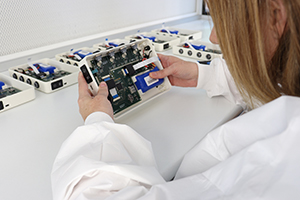 3. Design with manufacture in mind. The product may solve a problem but if the manufacturing costs are prohibitive it may not be viable. Working with a design partner can help you find the right fit in terms of supply chain and manufacture. We always recommend using an ISO-certified (ISO 13485) or FDA-registered manufacturer. It is also a good idea to engage a patent attorney to ensure your IP is protected.
4. The approval process can be long and arduous. Extensive testing using clinical and user trials is required to provide safety, effectiveness and usability. We have seen companies tied up for years in negotiation with the regulatory authorities as they find their device is not fit for purpose. A device may go through several iterations before it meets the legislative requirements.
5. Working with a trusted partner gives you access to a multi-disciplinary team with as broad range of expertise and knowledge. Our team of 16 for example have skills in engineering, bio-mechanics, optics, electronics, software, photonics and product design.
In summary, working with an experienced medical device design partner can save you time and money, avoid regulatory pitfalls, offer access to an experienced multi-disciplinary team and give you a fighting chance to bring your product to market.
For further information, please visit: www.wide-blue.com